Key takeaways
- Compare net payout and operational effort, not only the advertised platform fee.
- Ask whether platform fees, payment charges and GST are bundled, passed to attendees or deducted from settlement.
- Payout timing can affect cash flow for venues, artists, vendors and permissions.
- Refund rules should cover platform fees, payment charges, QR invalidation and attendee communication.
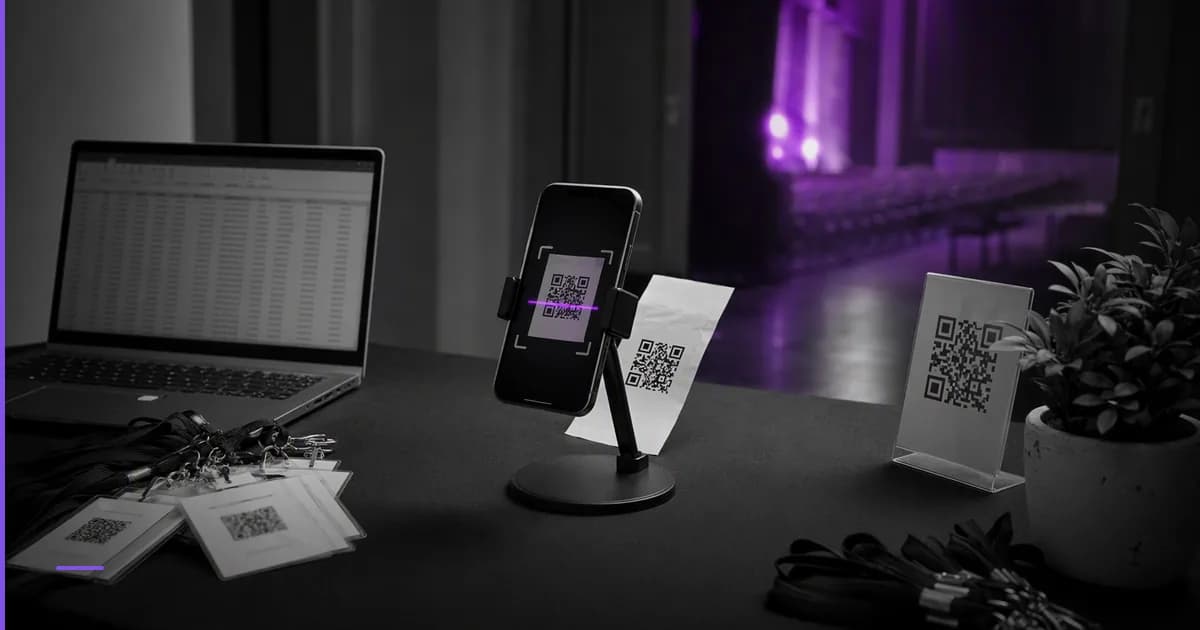
- QR check-in, scanner roles and attendance exports can materially reduce event-day workload.
What should Indian organisers compare beyond the headline fee?
For the search query "event ticketing platform fees comparison india", the useful answer is not one percentage. The real cost is the combination of platform fees, payment gateway charges, GST treatment, payout timing, refund rules and the operational cost of checking people in at the venue.
A platform that looks cheaper per ticket can become expensive if it delays payouts, charges separately for refunds, lacks QR check-in, or forces your team to reconcile UPI collections manually. For a college fest, paid workshop, stand-up show, food pop-up or venue-led event, compare the net amount you receive and the work your team must still do.
Platform fee: the fee charged by the ticketing platform for listing, ticket creation, booking management, QR tickets, analytics, support or organiser tools.
Payment gateway charge: the fee charged for processing UPI, card, net banking, wallet or other digital payments. It may be bundled into the platform fee or shown separately.
Net payout: the amount transferred to the organiser after platform fees, payment charges, GST on fees, refunds, chargebacks, adjustments and any holdbacks.
Which cost components change the final ticket price?
Do not compare only the fee shown on the pricing page. Ask each vendor to show a sample settlement for a realistic event: ticket price, expected ticket count, payment methods, refund rate and GST assumptions.
| Cost component | Why it matters | What to ask before signing up |
|---|---|---|
| Ticket face value | This is the amount attendees think they are paying for entry, access or registration. | Is the displayed price inclusive of all buyer charges, or are convenience fees added at checkout? |
| Platform fee | This may be charged to the organiser, passed to attendees, or split. | Is it a fixed fee, percentage fee, per-ticket fee, monthly fee, or negotiated event-by-event? |
| Payment charges | UPI, cards and other methods can have different commercial terms. | Are payment charges included in the quoted platform fee or deducted separately from settlement? |
| GST on fees | GST treatment affects invoices, accounting and the buyer-facing price. | Who raises the tax invoice, on what amount, and is the quote GST-inclusive or GST-exclusive? |
| Refund and cancellation cost | Refunds can reduce revenue and add operational work. | Are platform fees and payment charges refunded when an attendee cancels? |
| Payout timing | Cash flow matters when venues, artists, vendors and permissions must be paid before event day. | Is payout rolling, post-event, milestone-based, or subject to risk review? |
| Check-in operations | Manual entry verification can create queues and duplicate-entry risk. | Are QR tickets, scanner roles, offline scan mode and attendance exports included? |
GST is not a ticketing-platform-only issue. It depends on the organiser, event type, place of supply, invoices and applicable tax position. Use the official GST portal for registration and compliance context, and confirm the treatment with your accountant rather than relying on a platform sales call.
If your event involves sponsors, artists, venue partners or campus committees, put settlement and tax responsibilities in writing. Zettaura's live product ZiaSign is built for sending, signing, tracking and understanding agreements in one secure workflow, which is useful when multiple stakeholders must approve event terms.
How do platform categories differ in India?
Indian organisers usually compare five categories, even when they call all of them "ticketing platforms". The best choice depends on whether you need discovery, control, speed, local operations or a complete event workflow.
| Category | Typical fit | Cost questions to ask | Operational trade-off |
|---|---|---|---|
| Large event marketplaces | Public events that need audience discovery and a familiar consumer checkout. | Which charges are paid by the organiser, which are paid by attendees, and what is included in listing visibility? | Stronger discovery may come with less control over the buyer journey and settlement workflow. |
| Self-serve ticketing tools | Workshops, college events, community events and paid registrations. | Are QR tickets, coupons, attendee exports, refunds and payment processing included or add-ons? | Faster setup, but support depth and local execution can vary by plan and city. |
| Forms plus payment links | Small events with simple registration and low compliance needs. | What is the payment fee, and how will you reconcile names, payments, cancellations and check-in? | Low initial setup, but more manual work for entry, refunds and reporting. |
| Custom website plus payment gateway | Founders, venues or brands that want full control over UX and data. | What will engineering, maintenance, payment compliance, hosting and support cost over the year? | High flexibility, but your team owns bugs, settlement logic and event-day tooling. |
| Local or vertical-specific platforms | City-led experiences, campus events, venues and niche communities. | Is pricing available for your city, event type and expected ticket volume? | Potentially better local fit, but you must verify maturity, support and launch availability. |
Zettaura is building MakeMySquad, a launching-soon event booking and live-experiences platform with QR ticketing and UPI payments, starting in Coimbatore, India. That makes it relevant for organisers who value local execution and simple digital entry, but you should evaluate its availability, pricing and event fit at launch like any other platform.
For organisers comparing Zettaura's broader product direction, the products page explains how the company builds focused AI products across event organising, document workflows and finance.
What should you ask about payments, GST and payouts?
Payment terms are often where a low advertised fee becomes hard to use. A platform should be able to explain its payment flow without vague answers.
Use this checklist in vendor calls:
- Which payment methods are supported for Indian attendees: UPI, cards, net banking, wallets or other methods?
- Is UPI handled through a regulated payment partner, and how are failed, pending and duplicate payments reconciled?
- When does the organiser receive money: after each transaction, on a schedule, after the event, or after a review period?
- Can the platform split settlement across organisers, venues, artists or chapters, or does one entity receive the full payout?
- What documents are needed for onboarding: PAN, GSTIN, bank proof, authorisation letter, society registration or company details?
- What settlement report is provided: ticket ID, attendee name, payment method, gross amount, fees, GST, refund status and net payout?
Digital payment systems in India operate within a regulated environment overseen by the Reserve Bank of India, and organisers can use the RBI website for official payment-system context. UPI is operated by the National Payments Corporation of India, whose NPCI website is the authoritative source for UPI scheme-level information.
For GST, do not assume all events are treated the same way. A workshop, entertainment event, conference registration, campus fest pass or venue booking may have different invoicing and tax considerations depending on facts. Use the GST portal for official services and ask your CA to review the platform's sample invoice before ticket sales go live.
If your team is standardising approvals across sponsors, vendors and venues, Zettaura's solutions page is a useful starting point for thinking about workflow controls, while ZiaSign can support signed agreements and audit-friendly document handling.
How do refunds, cancellations and disputes affect cost?
Refund policy is a commercial decision, but the platform determines how painful it is to execute. A clean refund flow should update the attendee record, ticket validity, payment status, settlement report and organiser dashboard together.
Ask these questions before you publish the event:
- Can you issue full and partial refunds from the dashboard?
- Are platform fees refundable, non-refundable, or configurable by event?
- Are payment gateway charges reversed, retained, or passed through as a cost?
- Can you set refund cut-off dates by ticket category?
- Does a refunded QR code become invalid immediately?
- How are chargebacks, duplicate payments and failed UPI confirmations handled?
- Can attendees see the refund status without calling the organiser?
The Department of Consumer Affairs is a useful official reference point for consumer-rights context in India, especially when drafting cancellation and refund wording for attendee-facing pages. Keep the policy short, visible and consistent across the ticket page, confirmation email and WhatsApp or SMS communication.
Refunds also involve personal data: attendee names, phone numbers, email addresses, payment references and sometimes college IDs or company names. India's Digital Personal Data Protection Act is available through India Code, and MeitY is the relevant ministry for digital policy context. For a practical organiser-facing checklist, read Zettaura's guide to data processing agreement basics in India before sharing attendee data with sponsors, vendors or external check-in teams.
Do you need QR check-in, seating or on-ground support?
Ticketing is not complete when payment succeeds. Your cost comparison should include the minutes lost at the gate, the number of volunteers needed, and the risk of duplicate entry when screenshots circulate in WhatsApp groups.
QR check-in: a ticket validation method where each attendee receives a unique code that is scanned at entry and marked as used, reducing manual list checking and duplicate access.
For QR-led events, compare these capabilities:
| Requirement | Why it matters at the venue |
|---|---|
| Unique QR per ticket | Prevents one booking confirmation from being reused by multiple people. |
| Real-time scan status | Helps multiple gates avoid admitting the same ticket twice. |
| Offline or poor-network handling | Important for campuses, basements, auditoriums and outdoor venues with weak connectivity. |
| Scanner roles | Lets volunteers scan tickets without accessing payout or attendee export settings. |
| Category-wise validation | Separates VIP, early bird, student, backstage, workshop and general entry tickets. |
| Attendance export | Helps post-event reporting, sponsor deliverables and certificate issuance. |
Reserved seating, table booking, add-ons, food coupons and multi-day passes add complexity. If your event needs these, ask vendors to demonstrate the exact flow rather than confirming it verbally. A five-minute live demo can reveal whether the system was built for your event type or only for basic registrations.
MakeMySquad's planned combination of QR ticketing and UPI payments is aimed at live experiences, beginning with Coimbatore. If you are organising events in or around the city, you can follow updates through MakeMySquad or reach Zettaura via the contact page.
Where this leaves you
Shortlist platforms using a sample settlement, not a pricing headline. Give each vendor the same event scenario: ticket price, expected attendance, payment methods, refund rules, GST status, payout deadline and check-in needs.
Your next step: create a one-page comparison with three columns - cost, cash flow and operations. If a platform cannot clearly explain fees, taxes, payouts, refunds and QR check-in before you sell tickets, it is not ready to carry your event revenue.
Frequently asked questions
What is the main fee to compare in an Indian ticketing platform?
Compare the net payout, not only the platform fee. Net payout accounts for platform charges, payment gateway charges, GST on fees, refunds, chargebacks and any deductions before money reaches your bank account.
Should attendees or organisers pay the platform fee?
Both models exist. Passing the fee to attendees can protect organiser revenue but may increase checkout drop-off, while absorbing the fee gives a cleaner buyer price but reduces your margin. The better choice depends on ticket price sensitivity and event positioning.
Is UPI enough for online event ticketing in India?
UPI is important for Indian attendees, but many events also need cards, net banking, wallets or corporate payment options. You should also check how pending UPI payments, failed transactions and refunds are reconciled in the organiser dashboard.
Do small college events need QR ticketing?
QR ticketing is useful whenever entry queues, duplicate screenshots or volunteer coordination can become a problem. Even small events benefit if the platform can scan tickets quickly, mark them as used and export attendance after the event.
MakeMySquad is launching soon. Learn more about MakeMySquad or explore the full Zettaura portfolio.